search expand

Somaliske klaner – verdens beste forsikringssystem

Uansett hvor du er i verden vil du få mat, husrom, hjelp. Somaliske klaner er verdens beste sosialforsikringssystem, mener sosialantropolog Sara Johnsdotter. Sammen med sin medarbeider og tolk Aisha Omar forsker hun på familiebegrepet til somaliere i Sverige og London.

En klan kan være veldig stor, kan bestå av flere hundretusen mennesker, flere generasjoner bak i tid, spredt over flere land.

Johnsdotter sier til Göteborgs Fria Tidning:

– Jag vill kalla det för världens bästa socialförsäkringssystem. Det är ett skyddsnät som fångar upp dig, var du än är i världen. Var du än dyker upp har du släktingar och mat och husrum – och omvänt har du samma förpliktelser mot dem.

Og dette båndet overskrider klassegrenser:

– Intressant nog, och jag har letat, så saknas det helt och hållet ett klasstänkande bland somalier. Klassaspekten av samhället är helt underordnad släkten och klanen. Det är klart att det finns rika familjer och fattigare familjer, men resurserna rinner mellan dem hela tiden. Jag har fortfarande inte förstått hur det organiseras, trots att jag försökt reda ut begreppen i flera år.

Det er ikke lett å forske på klanssystemet. Ikke alle somaliere liker å snakke om det. Dels på grunn av klanenes rolle i krigen i Somalia, dels fordi de vet at mange folk i Vesten ser klansystemet som noe primitivt. Ikke minst derfor føres det kontinuerlig diskusjoner om klansystemets framtid. Mange somaliere i Sverige og London prøver å komme bort fra klantenkningen. Men samtidig vil alle bevare de gode sidene ved klansystemet – og der er sosialforsikringssystemet som tar hånd om deg hvorsomhelst på kloden.

>> les hele saken i Göteborgs Fria Tidning

Johnsdotter har også forsket mye på omskjæring

Uansett hvor du er i verden vil du få mat, husrom, hjelp. Somaliske klaner er verdens beste sosialforsikringssystem, mener sosialantropolog Sara Johnsdotter. Sammen med sin medarbeider og tolk Aisha Omar forsker hun på familiebegrepet til somaliere i Sverige og…
Read more

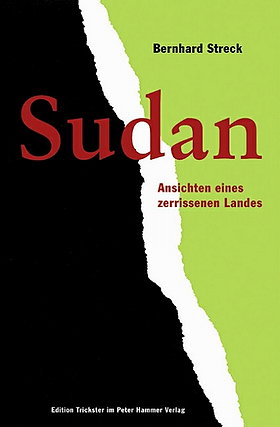
Eine “ethnologische Perspektive” auf die Probleme im Sudan – Buch von Bernhard Streck

buch cover

Sudan – Ansichten eines zerrissenen Landes heisst das neue Buch des Ethnologen Bernhard Streck, das soeben in der faz besprochen wurde. Streck geht es weniger um eine politische Analyse, sondern um eine Beschreibung und Erklärung aus ethnologischer Perspektive.

Obwohl es genug Information ueber den Sudan gebe, so Streck, “scheitern bislang alle westlichen Erklärungsmodelle: ein enormer Schub an technischem Fortschritt auf der einen, staatlich verordnete Exzesse von Grausamkeit auf der anderen Seite”.

In vielen Analysen dreht sich der Konflikt um Religon: Der islamisch geprägte Norden versuchte demnach den christlichen Süden unter seine Kontrolle zu bringen. Diese Interpretation habe, so Streck, einiges für sich, reiche aber als Erklärung nicht aus.

Als “Opfer des islamistischen Aufbruchs in Sudan” sehe der Autor, so die faz, weniger die Christen, für die der Islam ja traditionelle Schutzrechte kenne, sondern die Anhänger lokaler Religionen.

An der Rezension merkt man, dass weiterhin einiges unklar bleibt oder nicht ausreichend erklaert wurde. Laut einer Besprechung im Südwind Magazin 12 / 2007 setzt Strecks Buch Grundkenntnisse über den Sudan voraus. Und der Grossteil des Buches sei “trockenen wissenschaftlichen Höhenflügen gewidmet”.

>> Besprechung in der faz 30.3.08

>> Besprechung im Südwind Magazin 12 / 2007

>> Radio-Interview mit Bernhard Streck (WDR5)

SIEHE AUCH:

Schreibt in der WELT (regelmässig?) über ihre Feldforschung im Sudan

Challenges of Providing Anthropological Expertise: On the conflict in Sudan

Research in Sudan: “We anthropologists have a huge responsibility to give back to the places we study from”

buch cover

Sudan - Ansichten eines zerrissenen Landes heisst das neue Buch des Ethnologen Bernhard Streck, das soeben in der faz besprochen wurde. Streck geht es weniger um eine politische Analyse, sondern um eine Beschreibung und Erklärung aus ethnologischer Perspektive.

Obwohl es…

Read more

Via YouTube: Anthropology students’ work draws more than a million viewers

Many assignments go no farther than between the student completing it and the professor grading it. But assignments in Michael Wesch‘s anthropology classes at Kansas State University have been seen around the world and by as many as 1.5 million other people, we read in a press release.

We all know Wesch’ video The Machine is Us/ing Us that was viewed more than five million times. He is no one hit wonder. He has created several popular videos together with his anthropology students.

The spring 2007 intro to cultural anthropology class created the video “A Vision of Students Today”, which has been viewed more than 1.5 million times and prompted others to respond with their own videos. The video is up for a YouTube award for most inspirational video of 2007. It features Wesch’s class describing what it’s like for them to be college students today.

Wesch’s students and their video projects also have drawn attention of media from NBC to BBC. Yet the students’ work makes its way around the world without marketing, Wesch says:

That gets at the complexity of today’s media environment. The students don’t advertise. They get the videos out on blogs, people start linking to them, and other people find them.

>> read the whole press release (includes links to the videos)

>> Digital Ethnography blog by Wesch and others

SEE ALSO:

Interview with Michael Wesch: How collaborative technologies change scholarship

Many assignments go no farther than between the student completing it and the professor grading it. But assignments in Michael Wesch's anthropology classes at Kansas State University have been seen around the world and by as many as 1.5 million…

Read more

The last days of cheap oil and what anthropologists can do about it

Oil is vital to our growth economy. Yet, our need for continued access to fossil fuels drives many of today’s conflicts. And we are in the last days of cheap oil and need alternatives. In his guest editorial in the new issue of Anthropology Today (subscription required unfortunately), Thomas Love encourages anthropologists to examine the complex relationship between our lives and fossil fuels.

What are the consequenes of rising oil prices? Rising energy prices may prolong availability for those who can afford it, but will will cause uneven economic development and contribute to the deterioration of labour conditions in sweatshop economies, he writes.

A quick search reveals following news: Rwanda: High Oil Prices Make Essential Commodities Costly (allAfrica 28.3.08), Higher petrol costs ‘act like a tax on consumption’ (CNN, 7.8.06) Food prices are rising worldwide. Weather, oil costs among factors (Boston Globe 30.3.08), Oil prices hit hard on Asia’s poor. UNDP report ranks countries according to a new Oil Price Vulnerability Index (UNDP 25.10.07), and “What about the poor?”, askes the Energy report (1.8.07).

Thomas Love proposes following research questions:

How does this crisis resemble previous ones? What metaphors and symbols do people use to make sense of it all? To what discursive structures will people turn to make sense of the potential unravelling of their worlds? (…) How has the fossil-fuelled growth system already affected the lives of people in producing areas?
(…)
We need cross-cultural perspectives and commitment to ethnography to understand how such large-scale forces play out on the ground in the everyday lives of ordinary people. Detailed grasp of the non-fossil-fuelled ways of living of pre- and non-industrial peoples will convey to interested publics and policy-makers alternative ways of organizing human society. We can help understand how humans might manage to power down without precipitating collapse.

SEE ALSO:

What anthropologists can do about the decline in world food supply

Malaysia: Penan people threatened by demand for “green” bio-fuels

Dissertation: Survival in the Rainforest

Arctic refuge saved from oil drillers – Inuit divided

Indigenous Russians Unite Against Oil and Gas Development

Long battle between Argentine oil company and Ecuadorian indigenous community

A Solar power equipped school as gift to the Maasai: Good or bad?

Oil is vital to our growth economy. Yet, our need for continued access to fossil fuels drives many of today's conflicts. And we are in the last days of cheap oil and need alternatives. In his guest editorial in…

Read more

Another way of doing fieldwork: Developing websites with your informants!

Indigenous communities have embraced the internet from early on. The website of the Oneida Indian Nation was set up before the website for the White House. Anthropologist Maximilian C. Forte has developped several websites in collaboration with indigenous organisations. Website development is a mode of action research, he explains in an interesting paper that is based on a recent presentation.

In his research on Caribbean indigenous resurgence, he began offline and later moved online, he writes. It started after he has signed a reciprocity agreement with the leader of the Carib Community in Arima. In return for access to the community, Forte would assist them with whatever technological, graphic, and writing knowledge he had.

Website development is no purely technical process:

The websites that were created represented, to a large extent, collaborative writing exercises, emerging from meetings, conversations, and interviews. Viewers would not have known that the launching of some of the websites were also occasions for parties in my apartment, with photographs, drinking, music, drinking, laughter, and much more drinking.
(…)
The result of these early experiences led to my creating various online fora with a wider embrace, such as the Caribbean Amerindian Centrelink – part directory, part listserv, part message board, part online publishing centre – and then one of the earliest and still existing open access, peer reviewed journals in anthropology and history, that being KACIKE.

Together with his indigenous partners (informants) he created the field. In contrast to traditional fieldwork, the researcher and his informants predate the site, they don’t arrive at it.

Web-based and Web-oriented ethnographic research, Forte explains, leads to “a series of moves from participant observation to creative observation, from field entry to field creation, and from research with informants to research with correspondents and partners”:

The Internet permits the co-construction of cultural representations and documentary knowledge, especially where the resource that is produced is the result of collaboration between those we traditionally sorted out as the researchers and the researched.
(…)
Those who were traditionally “the researched about” in offline settings, now have access to the works of researchers, can argue back (as they often do), and produce alternative materials in their own right. No longer is there a simple one-sided determination by the researcher over what research should be about, how it should be done, how it should be written or shown, and what its results should be-researchers are often called to account.

Among the persons and communities that have had access to the technology there has been considerable enthusiasm for the internet from early on. “The Internet may be for marginalized indigenous minorities what the printing press was for European nationalism”, Forte writes. “We are not extinct” has become the leitmotif of online self representations by Caribbean indigenous persons and a basis for online activism, especially among Taínos.

These online struggles have produced some noteworthy successes in gaining recognition and some degree of validation from the usual authorities according to the anthropologist.

>> read the whole paper by Maximilian Forte on his own blog “Open Anthropology”

SEE ALSO:

Interview with Michael Wesch: How collaborative technologies change scholarship

Open Source Fieldwork! Show how you work!

“We have a huge responsibility to give back to the places we study from”

Collaborative Ethnography: Luke Eric Lassiter Receives Margaret Mead Anthropology Award

Play as research method – new Anthropology Matters is out

Going native – part of the darker arts of fieldworkers’ repertoir?

How to save Tibetan folk songs? Put them online!

The Birth of a Cyberethnographer: The MU5 is to Blame

Indigenous communities have embraced the internet from early on. The website of the Oneida Indian Nation was set up before the website for the White House. Anthropologist Maximilian C. Forte has developped several websites in collaboration with indigenous organisations. Website…

Read more