search expand

Verdensmusikk = ideologisk styrte kulturmøter?

talent

Antropolog Anne Ellingsen forsvarte nylig sin doktoravhandling Music and Ethnic Integration in Norwegian State Policies. Hun har tatt for seg Rikskonsertenes satsning på verdensmusikk som middel til
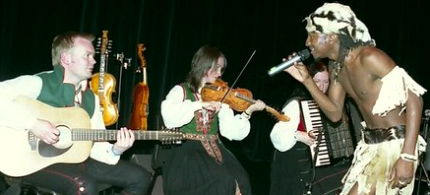
integrering. På fusion-konserter opptrer musikere fra forskjellige land samtidig. Slikt samarbeid skal gi tverrkulturell forståelse.

En fin tanke som sjelden blir realitet ifølge Ellingsens kronikk i Aftenposten. Det er først og fremst hvite mennesker som oppsøker slike konserter. Og mange musikere mente rammen er begrensende:

Mange av musikerne jeg har intervjuet, fremhevet at tverrkulturelt samarbeid i musikk kan fungere. De sa de først var positive til samarbeidsprosjekter, men at de etter hvert opplevde formen som begrensende. De var kritiske til at det ofte manglet tid til å øve sammen når musikere fra ulike tradisjoner skulle møte hverandre. De etterlyste også mulighet for et reelt valg mellom fusionprosjekter og andre konsertformer.

Både innvandrermusikere og norskættede artister uttrykker gjerne frustrasjon over ikke å få rom til å formidle sin musikk uten å delta i “integrering”. Også publikum kan reagere på noe de oppfatter som rutinemessig bruk av et “politisk korrekt” konsept.

Fokuset på etnisitet innen musikkmiljøet er tvilsomt. Musikk har alltid vært “flerkulturell”:

I internasjonalt musikkliv har utøverne ofte ulik etnisk bakgrunn. I markedsføringen av for eksempel Operaens ensembler, er allikevel artistenes etniske bakgrunn av underordnet betydning, mens musikken står i fokus.

Markedsføring av “verdensmusikk”, derimot, fremhever utøvernes etnisitet. Reklame for samarbeidsprosjekter understreker at musikere fra ulike etniske grupper opptrer sammen. Her er fokus på at artistene faktisk kan samarbeide. Konsertene fremstilles som “grenseoverskridende” fordi de krever kommunikasjon på tvers av etniske skillelinjer.

Fusjonstilen ser hun som et symbol på velferdsstaten:

Som i et slags musikkens svar på Kardemomme by samarbeider vestlige og ikke-vestlige musikere på scenen. Slike forestillinger gir inntrykk av en kompetent og effektiv integreringspolitikk i et økende fragmentert, fleretnisk samfunn.

>> les hele kronikken i Aftenposten

Bildet øverst har jeg tatt på Folkemusikkfestivalen i Førde i 2005. Jeg skrev om slike fusjonprosjekter i teksten Globalisert folkemusikk. For kritikk av begrepet “verdensmusikk”, se teksten Vi er alle fra Afrika.

talent

Antropolog Anne Ellingsen forsvarte nylig sin doktoravhandling Music and Ethnic Integration in Norwegian State Policies. Hun har tatt for seg Rikskonsertenes satsning på verdensmusikk som middel til
integrering. På fusion-konserter opptrer musikere fra forskjellige land samtidig. Slikt samarbeid skal gi tverrkulturell…

Read more

The socio-political geography of East Paris: Parisian slam poetry – a space of resistance?

The most recent paper I failed to give (see previous post) was looking at the slam poetry phenomenon from the perspective of where it is situated, – socio-politically as well as geographically. I wanted to explore the connection between the slam scene’s geographical position in the North and East (and to some extent the 13th Arrondissement in the South) and the socio-political characteristics of these parts of the city. Here’s the abstract for the presentation:

Parisian slam poetry – a space of resistance?
Cicilie Fagerlid, PhD fellow at Cultural Complexity in the New Norway (strategic research programme at the University of Oslo)

In this paper, I will explore the relationship between the Parisian slam (performance) poetry scene and the socio-political landscape of North and East Paris, where the scene is situated. This part of the city is historically popular and left-wing with an important influence of bohemians and artists, and an equally long history of regional and international immigration.

I will argue that what is created during an evening of poetry performances, is to some extent a space of biopolitical resistance. Similar forms of resistance to standardisations of everyday life and/or governmental politics overflow the urban space of the northern and eastern Parisian neighbourhoods – in terms of streetart, political and artistic posters and stickers, low-cost and “alternative” film and music festivals, readings and talks in bookshops and cultural centers, a plethora of demonstrations filling the streets with colours and noise and a general, unruly everyday streetlife. I will situate the slam poetry within this landscape and discuss to what extent Antonio Negri’s notion of a (bio)space “in-between” power relations can be a helpful analytical perspective:

“Where is exodus at home? Where is the space for those who want to go into exodus from power and its domination?” For me, exodus sometimes requires force. And this is, paradoxically, an exodus that does not seek an “outside” of power, but which affirms the refusal of power, freedom in the face of power, in the hollow of its meshes (Negri, Petcou, Petrescu and Querrien 2008).

Negri,Toni, Constantin Petcou, Doina Petrescu and Anne Querrien 2008: “What makes a biopolitical space? A discussion with Toni Negri” in Eurozine at http://www.eurozine.com/articles/2008-01-21-negri-en.html (accessed 02.05.2008)

I’ve decided to continue working on the problematics of this paper during the summer, making it into the two first chapters of my thesis (see the end of this post for a preliminary outline). In the first chapter, I will describe and analyse some of the areas where the slam soirées take place (how I’m looking forward to wander the streets of Belleville and Ménilmontant in my imagination again!). In Chapter 2, I will ask how we can understand the particular space created during a slam – thus grasping the micro-dynamics of a soirée – and secondly, making a connection to chapter 1, I will look at what might be the relations between the slam phenomenon and the particular environment of the city where it is situated.

For some reason, the summer Oslo mood certainly inspires a delve back into my memory of Parisians streets and cafés…

The most recent paper I failed to give (see previous post) was looking at the slam poetry phenomenon from the perspective of where it is situated, – socio-politically as well as geographically. I wanted to explore the connection between the…

Read more

– Genteknologien har ført til en kommersialisering av forskningen

cover

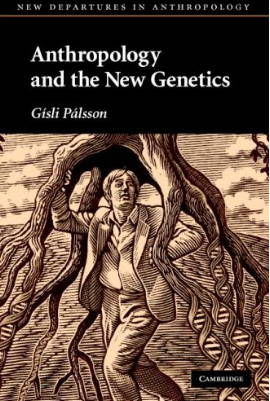
Som fiskere i havet på jakt etter en stor fangst, leter biologer i den menneskelige kroppen etter genene som gir den største avkastningen, skriver den islandske antropologen Gisli Pálsson.

I boka Anthropology and the New Genetics kaster han et kritisk blikk på den islandske gendatabasen Decode, leser vi i Dagens Nyheter.

Store forventninger var knyttet til geneteknologien, spesielt når det gjelder utviklingen av medisiner. Men den har heller ført til en kommersialisiering av forskningen:

Gisli Pálsson bok är en intressant studie av den fartblindhet som ofta kommer i kölvattnet av omvälvande kunskapsutveckling, som ju både den nya biologin och informationstekniken genomgått. Det ligger en frestelse i att slippa de gamla sega strukturerna, den tröga vetenskapliga vardagen, brottningen med en förlamande komplexiteten, och i stället kunna agera snabbt för att omvandla den grå vetenskapen till gyllene mynt.

Decode er et eksempel på gensentrismen eller genetiske determinisme som ifølge Gisli Pálssons dominerer den nye biologien:

Det finns också en metaforik och retorik som samverkar med ekonomin om att skapa den ideologi som betraktar genen som den enda nyckeln till kunskapen om livet. Träddiagram och släktträd är exempel på metaforer och retoriska figurer som reproducerar determinismen och föreställningen om enkla samband mellan orsak och verkan.

Ifølge antropologen blir denne utviklingen ikke diskutert på universitetene men innen skjønnlitteraturen. Flere nye romaner tar for seg denne problematikken.

>> les bokanmeldelsen i Dagens Nyheter

SE OGSÅ:

Bioteknologi-konferanse: Samfunnsvitere vil kjøle ned ”gen-hypen”

cover

Som fiskere i havet på jakt etter en stor fangst, leter biologer i den menneskelige kroppen etter genene som gir den største avkastningen, skriver den islandske antropologen Gisli Pálsson.

I boka Anthropology and the New Genetics kaster han et kritisk…

Read more

Thesis: How Indian women fight the stigma of divorce

Three weeks ago, anthropologist Siru Aura defended her doctoral dissertation Women and Marital Breakdown in South India: Reconstructing Homes, Bonds and Persons at the University of Helsinki. She has studied divorced, separated and deserted women from different socio-religious backgrounds in the city of Bangalore in South India.

In her conclusion she makes several interesting points. We all know that we should avoid essentializing. Particularly since the 1990’s, Siru Aura writes, there has been a tendency to emphasise the differences among the various groups of Indian women, based their cultural, social, religious or regional backgrounds. One should avoid presenting a “monolithic” picture of “an Indian woman” – a representation that does not exist in real life.

But this focus on diversity can make us blind to seeing what these divorced and separated women have in common. In her thesis, she challenges the popular notion that religion is a main determinator of a person’s social position in India. It’s rather being a wife and being in an unequal power relationship with the husband.

The Indian proverb “there are only two castes: men and women” highlights that the inequality between men and women is so enormous that it overpowers differences between the women, Siru Aura writes:

The significance of wifehood in the South Indian environment leads to my suggestion that there is such a thing as a South Indian marital breakdown. Although the women of different religious communities (Hindu, Muslim, Christian, Parsi) each have their own religious personal laws concerning marriage and divorce, they share similarities in their ways of constructing wifehood. Therefore the practical reasons and consequences of marital problems are often similar in different religious groups.
(…)
The women, from the richest to the most impoverished; from the most highly-educated and sophisticated to the most illiterate women; from their various religious backgrounds: all tolerated severe harassment throughout their marriages and their threshold of leaving the marriage was very high.

But as her study shows, more and more women question male domination. They use the cultural and social structures of their society creatively in order to improve their situation – for example by adopting the prestigious family roles of sons or fathers and by the means of legal procedures and public demonstrations and by the other activities of women’s organisations.

The anthropologist thinks that the womens’ activities “could gradually lead to a greater acceptance of divorce as an unfortunate but not unavoidable state of affairs and the abolishment of the stigma attached to divorced or separated women”:

I suggest that the transformation of social and kin relations will continue because marital breakdown may become a more common occurrence in Bangalore and even broaden further in South India and consequently the number of love marriages as well as the number of single women will also increase. Despite the importance of wifehood in South India, the conditions of wifehood are changing.

Marital breakdown is an anomaly in South India. In Siru Aura’s view, the focus on the margins of the kinship relations revitalises kinship studies:

It emphasises the importance of looking between the structures and highlights the worth of looking beyond the kinship rules and into the “exceptions” to the rules, which are, as I suggest, as frequent as the rules themselves.

As I have shown, although the exceptions are hard to pin down, they are of great consequence: ignoring them may in fact distort kinship theory. Moreover, this study demonstrates that examining something truly significant in Indian society such as personhood, gender or law, or the interplay between an agent and the structure, leads us to study kinship. This keeps the study of kinship at the heart of anthropology in India and makes the renewal of it an anthropological mission.

>> download the thesis

SEE ALSO:

Chronicles Women’s Social Movements in India

Unmarried Women in Arab Countries: Status No Longer Dependent upon the Husband

China: Where women rule the world and don’t marry

On African Island: Only women are allowed to propose marriage

Three weeks ago, anthropologist Siru Aura defended her doctoral dissertation Women and Marital Breakdown in South India: Reconstructing Homes, Bonds and Persons at the University of Helsinki. She has studied divorced, separated and deserted women from different socio-religious backgrounds in…

Read more

“Prostitution is not sex for money”

(via CultureMatters) Prostitution is a fascinating topic and means different things in different parts of the world. In the American Sexuality Magazine, anthropologist Lisa Wynn writes about her difficulties to understand what Egyptians meant when they said “prostitute”.

The article explains why we always have to think out of the box and leave our own preconceptions behind. She writes:

Eventually I realized that the reason I was struggling to understand the concept of a prostitute had everything to do with my own preconceptions about sex and money. I thought of prostitutes as women who had sex for money.

It was not the injection of money into a sexual relationship that defined it as prostitution:

What is involved in defining a prostitute in Egypt, then, is a complex moral judgment about a woman’s social behavior, the number of her sexual partners, the extent to which she submits to familial controls over her social life, and her loyalty to her current romantic partner.

>> read the whole story

Similar points have been made by anthropologist Bjarke Oxlund who conducted research among students at the University of Limpopo in South Africa, see my earlier post An anthropologist on sex, love and AIDS in a university campus in South Africa. Earlier this year, anthropologist Patty Kelly argued for a decriminalization of prostitution.

(via CultureMatters) Prostitution is a fascinating topic and means different things in different parts of the world. In the American Sexuality Magazine, anthropologist Lisa Wynn writes about her difficulties to understand what Egyptians meant when they said “prostitute”.

The…

Read more